We Didn’t Start With Our Dream Home Either
There’s been a lot of conversation lately about how much easier previous generations supposedly had it when it came to buying a home.
And while I certainly recognize that today’s homebuyers face some very real affordability challenges, I think there’s an important part of the homeownership story that often gets overlooked.
Most of us didn’t start with our dream home. We started with what we could afford.
And my husband and I were no exception.
Our First Home: $95,000 and a 13.5% Interest Rate!
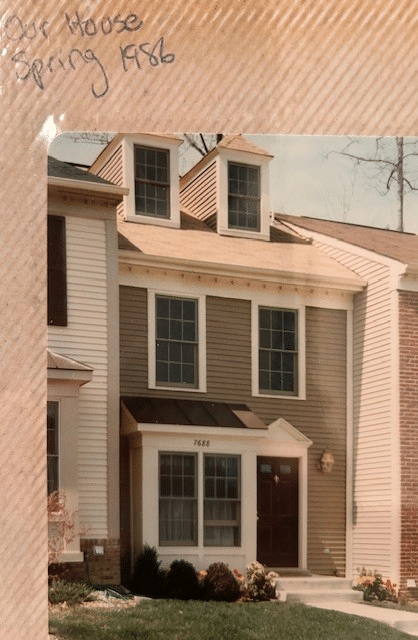
Our first home in Springfield, Virginia, spring 1986.
In 1985, my husband-to-be and I were in our mid-20s when we signed a contract on a brand-new, 1,100-square-foot townhouse in Springfield, Virginia.
The purchase price was $95,000, our combined gross annual income was just $27,000, and our mortgage interest rate was a whopping 13.5%! We financed the home with an FHA loan, putting just 3.5% down.
The house took six months to build, and during that time, we saved every penny we could. We were young, excited, and very nervous about taking on such a big financial commitment.
Was it our dream home? Not even close. But it was ours, and we couldn’t have been prouder.
Just 2½ years later, we were ready to start a family and needed more space. When we sold our townhouse, we walked away with approximately $35,000 in net equity, which we used toward the down payment on our next home, a modest single-family house.
That little townhouse wasn’t our forever home, but it helped us take the next step in our lives.
Sometimes Waiting Has a Cost, Too
One thing I’ve learned over nearly 40 years in the mortgage business is that buyers sometimes become so focused on saving a larger down payment that they overlook the potential cost of waiting.
Here’s a little perspective.
At an illustrative 7.3% interest rate on a 30-year mortgage, putting an additional $10,000 down reduces the monthly principal and interest payment by approximately $69.
Now, $69 a month certainly matters. But how long might it take to save that additional $10,000? A year? Two years? Longer?
During that time, home prices could rise, rents may increase, and you’re postponing the opportunity to begin building equity.
Of course, home values can also decline, and ownership comes with expenses and responsibilities. For some buyers, waiting and saving more is absolutely the right decision.
The question isn’t always how much more you can save. Sometimes it’s what you might be giving up by waiting.
Today’s Market May Offer More Opportunities Than You Think
Despite today’s affordability challenges, buyers may have negotiating opportunities that were harder to come by just a few years ago.
Seller concessions, temporary interest rate buydowns, price negotiations, and creative financing strategies can sometimes make purchasing more attainable than buyers initially expect.
And something I’ve always believed is that the best mortgage isn’t necessarily the one with the lowest interest rate. It’s the one structured to support your financial goals.
The key is understanding your options before deciding what’s possible.
The Greatest Return Isn’t Always Financial
Over the years, I’ve come to appreciate that the greatest return on a home isn’t always measured in dollars.
It’s the traditions we create, the family and friends we welcome through our doors, the children we raise, and the everyday moments that become treasured memories.
It’s the place where so many of our life’s stories unfold.
And as our lives change, our homes often change with us. We make improvements, build equity, raise families, and sometimes use the value we’ve accumulated to begin an entirely new chapter.
That’s what homeownership can do.
Having helped thousands of families navigate these important transitions, I’ve seen firsthand how homeownership can contribute to long-term financial security. But it can also become something much bigger: a foundation for your family and your future.
We All Have to Start Somewhere
You don’t have to begin with your dream home.
You don’t have to buy at the perfect interest rate.
And you don’t have to wait until the housing market feels perfect.
Most of us didn’t start with the income, savings, or financial position we have today.
We started where we were.
That doesn’t mean everyone should rush into buying a home. Financial readiness matters, and sometimes waiting is the smartest decision.
But if you’ve been telling yourself, “I missed my chance,” I want you to know that may not be true.
Looking back, I’m grateful we didn’t wait until we could afford something bigger or better. Our little townhouse wasn’t our forever home, but it opened the door to everything that came next.
Your first home doesn’t have to be your dream home. It might simply be the home that helps you get there.
And if you or someone you know is wondering what that first step might look like, I’m always happy to help explore the possibilities.
Payment illustration assumes a 30-year fixed-rate mortgage at 7.3%. Savings reflect principal and interest only, not taxes, insurance, or mortgage insurance. Actual financing terms and savings will vary.